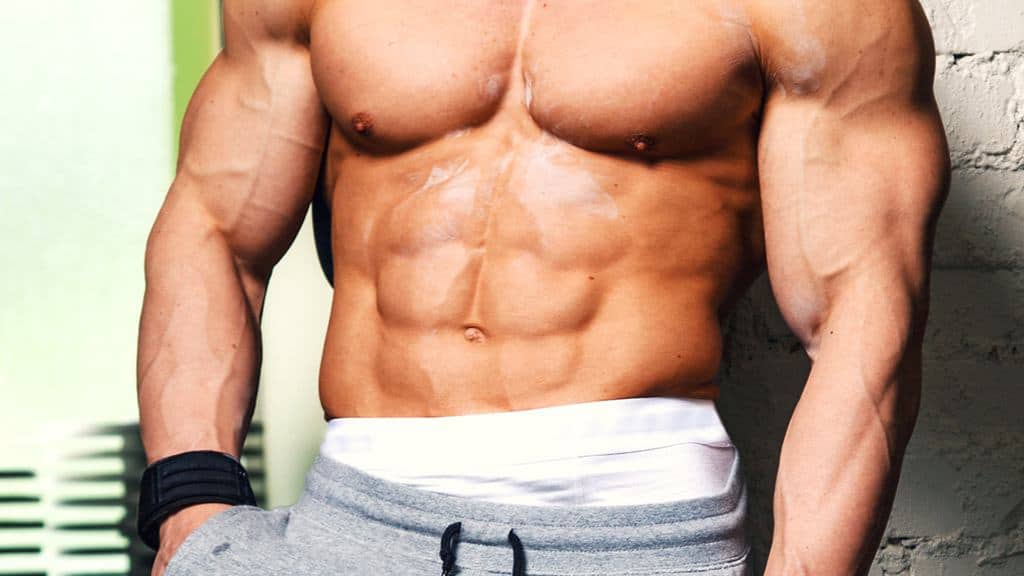
How to Get Bigger Abs: Best Training Exercises for Thick, Rock-Solid Abs
Getting visible abs can be difficult, and it is a common goal for gym-goers. Diet is important, but so is learning how to build abdominal muscle through effective training. This article explains how to increase abdominal hypertrophy.
How to Get Bigger ABS
Building thick abs is not about finding one perfect ab exercise and repeating it ad infinitum it’s about finding a range of exercises that complement each other perfectly. It’s about finding the right training volume, and the correct rest intervals between sets. We will take a look at each of these before finishing off with a thick abs workout.
Before You Start
As we mentioned in the introduction, diet is a very important aspect of training for thick abs. There’s no point doing thousands of repetitions of crunch variations if you are following a high-calorie diet and gaining weight. Excess adipose tissue (body fat) will disguise any progress that you make. Keep this in mind while focusing on your training.
You want to create a small calorie deficit, this will lead to your body burning excess body fat to maintain your metabolism. A calorie deficit is created when you consume fewer calories than you expend. The reason why you should be creating a small calorie deficit rather than a large one is that you still need those calories to build your abdominal muscles. Too big a deficit will hinder your progress.
Another thing that you should do is take before photos, take tape measurements, and write them down. This is crucial so that you can track your progress, if you don’t do that how will you know if it’s working?
Exercises for Bigger Ab Muscles

Most people think that doing a few sit-ups is enough to get a decent six pack, while others maintain that it is unnecessary to do any exercises that target the abs, provided that you perform enough compound movements. Neither side is completely right or wrong.
Doing lots of crunches will help you to get bigger abs, while compound movements will also help strengthen them. However, neither method is quite as effective as combining the two together.
Compound movements such as the bench press, barbell squat, or deadlift work multiple muscle groups and joints. They also require excellent posture, and for many, there is the need to brace your abs. This creates a “neutral spine” and also braces the core, protecting you from injury and improving your technique.
Perform these exercises enough and the strength benefits for your abdominal muscles will be huge.
Bret Contreras, one of the most well-known fitness experts around used an electromyogram (EMG) to take measurements of the exercises that worked the abdominal muscles the most. His tests found that chin-ups were one of the best exercises for targeting the rectus abdominis.
These are the main “six pack” muscles. This is interesting because most lifters would consider a chin up a back exercise, with a little bicep involvement. But actually they are possibly the best exercise that you can do for abs.
So as you can see, by performing a highly difficult back exercise (this wouldn’t work with an assisted pull up in the same way) you’re actually working your abs harder than almost any exercise! Other exercises which are decent for strengthening the abs would be front squats, lunges, farmers walks, Turkish Get Ups (excellent for the external oblique muscles), zercher squats, the list goes on.
Turkish Get-Up Demonstration Video
https://www.youtube.com/watch?v=fq127w6iSyE&feature=youtu.be&t=28
Next, you have ab specific exercises, you’ve got your usual exercises; sit-ups, crunches, planks, but the most effective ones are slightly less well known. Hanging leg raises, swiss ball rollouts, and ab wheel rollouts are the most effective exercises for the rectus abdominis (according to Bret). Then you have bodysaw, and tornado bodyslams which are great for the internal obliques and external obliques.
Other exercises that you could throw into your routine include rope crunches (every bro’s favorite ab exercise – and very effective), bicycles, lying knee raises, and the leaning tricep pushdown. This is where you stand in front of a cable machine and attach a wide handlebar.
Hold each handle in a wide stance with elbows locked. The bar should be around shoulder height, keeping your arms straight pull the bar down in an arc until it reaches your waist. Pause, and then slowly raise it back up. While this is an absolutely killer tricep and lat exercise, it also really works the abdominals.
Don’t forget cardio to help you create that calorie deficit, while any exercise is great, doing a circuit which includes exercises such as kettlebell swings, mountain climbers, plank get-ups, and Burpees, will also work your ab muscles! Perhaps a TABATA program for fat burning, improved cardio, and bigger ab muscles?
How Often Should I Train for Thick Abs?
According to Mark Dugdale, an IFBB Pro Bodybuilder, the optimal amount of days to train abs per week is between four and six.
He believes that this is the ideal frequency to see the best results, particularly if you are looking for that big blocky abs look.
Before you start filling your calendar with ab sessions though, it is important to remember that Mark Dugdale is a professional bodybuilder and you are (almost certainly) not.
Successful bodybuilders may have natural advantages over regular trainees, just as an elite sprinter will run faster than an amateur jogger. Some also use performance-enhancing drugs, and artificially increasing testosterone levels can affect training and recovery. If you are drug-free, consider training abs less than 4-6 times per week, perhaps around 3-4. This can reduce the risk of overtraining and injury.
Sets, Reps, and Rest Periods
Usually, when training for hypertrophy it is best to use a variety of rep ranges. Obviously higher rep ranges are great for building muscle, but adding in a few low rep sets of certain exercises to “mix things up” is a great idea.
Three to four sets per exercise, three to four exercises, some high rep, some medium rep, and maybe even a low rep sets exercise.
Rest periods should be around 2-3 minutes for hypertrophy, but if you are performing abs as part of a fat loss circuit you would want to drop that rest period down to 30-45 seconds. As with any exercise, if you feel that you need more rest then take it. Be strict, but if you are feeling dizzy, short of breath, or nauseated, then increasing rest times is perfectly acceptable.
Should You Train Abs Separately or as Part of a Training Program?
This really is a judgement call on your part, and depends on what your goals are, what your level of fitness is, and what time you have available. If you are a new gym goer, and want to train 4 times per week, then you could easily train weights twice (with those compound exercises thrown in as added abs exercises) and then have two half cardio/ half abs sessions per week. Alternatively you could add a couple of different ab exercises onto the end of each session that you do.
You could also use ab training as a form of active recovery. This is where you train one day in a gym, and then the next day you rest and recover. But instead of just lying around eating junk food, active rest would involve walking more, maybe a light cycle, or even some ab exercises.
Thick Abs Workout
If you are planning on performing a solo ab workout to get bigger abs then consider trying the following workout once or twice per week.
- Warm Up – Mountain Climbers TABATA (4 minutes)
- Ab Wheel Rollouts 3 x 10 reps
- Hanging Leg Raises 3 x 12-20 reps
- Rope Crunches 3 x 6-10 reps
- Lying Knee Raises 2 x 20 reps (performed very slowly and with perfect form)
| Ab Workout | ||
|---|---|---|
| Exercise | REPS | SETS |
| Mountain Climbers TABATA | Warm Up (4 minutes) | |
| Ab Wheel Rollouts | 3 | 10 |
| Hanging Leg Raises | 3 | 12-20 |
| Rope Crunches | 3 | 6-10 |
| Lying Knee Raises (performed very slowly and with perfect form) | 2 | 20 |
Frequently Asked Questions
How do I train my lower abs?
The lower abs respond best to movements that bring the hips toward the ribs: hanging leg raises, reverse crunches, and lying knee raises. Add one or two of these to every session and progress them the same way you would any lift.
Do I need a low body fat percentage to see abs?
Yes. Even thick, well-trained abs stay hidden under a layer of fat, so a lower body fat percentage is what makes a six-pack visible. For most men that means getting into roughly the low teens, and for most women the high teens to low twenties.
How many times per week should I train abs?
Three to four sessions a week is enough for most drug-free lifters to build the muscle without overtraining. Bump the weight and reps before you bump the frequency.
What is the best exercise for a bigger six-pack?
There is no single best move, but chin-ups, hanging leg raises, ab-wheel rollouts, and reverse crunches consistently rank at the top for building the rectus abdominis. Rotate through them so the abs keep adapting.
Final Thoughts
If your goal is to build bigger abs and a stronger core, the workout above is a practical place to start. You can also add any of the other ab-specific exercises mentioned. Include compound exercises in your regular workouts, particularly chin-ups if you can perform them with good form. As your body composition changes, an FFMI calculator can help you monitor fat-free mass relative to height.
If you have any questions about diet, exercise, or anything at all about how to get bigger abs then please leave a comment below.